


© Wolterton.
Photo: Eva Herzog
Wolterton Arts & Culture programme 2026:
Phyllida Barlow and Daisy Parris
Wolterton presents two major exhibitions of work by Phyllida Barlow and Daisy Parris as part of its 2026 Art & Culture programme, conceived by Artistic Director and Lead Curator, Simon Oldfield. Installed throughout the Hall’s historic interiors and surrounding grounds, the exhibitions set two distinct contemporary practices against one of Britain’s most assured Palladian houses. Built in 1741, Wolterton’s symmetry and restrained grandeur belong to an architectural language designed to communicate permanence and authority. Against this certainty, both artists act deliberately and with conviction to disrupt and test boundaries, physically, materially and emotionally. At Wolterton, the interaction between contemporary artworks and the Hall’s architecture and landscape becomes central to the programme, allowing each practice to challenge and reframe the historic environment in different ways.
Book your tickets…
11am – 4pm Wednesday to Sunday | Last entry is at 15:45
Tickets are free for the exhibition and entrance to Wolterton, but must be booked in advanced. Please select a date and the number of tickets
Dates available:
Please note the Estate will be closed on these specific dates for private events:
22nd August.
We invite you to consider a donation to The Ted Ellis Trust, which is dedicated to the preservation of the unique Wheatfen Nature Reserve. The Ellis family’s commitment to environmental conservation spans generations and continues to this day at Wolterton. You can learn more here.
Click ‘Donate’ to donate £5 to The Ted Ellis Trust when you book your free ticket to come and visit us.

© Wolterton.
Photo: Eva Herzog
Phyllida Barlow: disruptor
Opening on 20 May 2026, Phyllida Barlow: disruptor, a solo exhibition curated by Simon Oldfield with Guest Curator Clare Lilley, unfolds across three rooms at Wolterton and into the landscape beyond. disruptor brings together more than 70 works spanning over five decades of the artist’s career, from works on paper to large-scale sculptural installations.
Constructed from simple sculptural materials — plywood, scrim, plaster, cement, fabric and tape — Barlow’s works foreground their own making, with joins that remain visible, surfaces that are worked, and adjustments all legible to the viewer. Set against Wolterton’s marble, stone and decorative plasterwork, these materials create a striking contrast, grounded not in lineage but in labour and immediacy. Barlow’s sculptures activate and disrupt the architecture, rather than decorating it.
Central to the presentation is a body of drawings dating from the 1970s to early 2010s, many rarely shown publicly. In the Portrait Gallery, the drawings mark a shift in scale, installed in a dense salon-style arrangement that alludes to the history of the room and giving a window into the inner working of the artist as she drew barriers, stacks, and provisional structures.
Barlow reshaped contemporary British sculpture by refusing polish and heroic permanence in favour of awkwardness, disruption, vulnerability and the visible trace of making. untitled: stackedchairs (2014) challenges the structural order of Wolterton; its piled forms embodying Barlow’s interest in precarious balance and everyday materials. Even at large scale, her work retains the sense of the hand: adjusted, reconsidered and held in tension rather than resolved.
PRANK: jinx; 2022/23, comprising large, rusted steel work tables, awkwardly stacked, further reveals Barlow’s sensitivity to material presence as it shifts with light and weather: sun sharpens its planes, rain deepens its colour, and shadow fractures its outline. The recurring white motif, which Barlow called “rabbit ears”, perches atop the angular assembly; a playful flourish, it signals the moment when uprightness begins to “pretend” at authority. Against the formal Grade I-listed landscape of Wolterton, PRANK resists picturesque harmony, asserting an assembled structure – provisional rather than fixed – and, with Barlow’s characteristic wit, nudging sculptural order off balance.
“’Phyllida Barlow’s work understands sculpture as a negotiation – of gravity, effort and balance – rather than an assertion of authority. Her forms appear provisional, stacked and braced against collapse, yet through that precariousness they heighten our awareness of space and our own bodies moving through it.’
Clare Lilley, Guest Curator.
Phyllida Barlow, untitled: stackedchairs (detail), 2014, timber, plywood, cement, paint,
sand, PVA, varnish, 150 x 640 x 455 cm / 59 x 252 x 179 1/8 inches
© Phyllida Barlow Estate. Courtesy the Phyllida Barlow Estate and Hauser & Wirth.
Photo: Alex Delfanne

Daisy Parris, Courtesy of the artist and Sim Smith, London. Photography by Max Bainbridge
Daisy Parris: Fist Full of Dreams
Running concurrently, Daisy Parris will present Fist Full of Dreams, a solo exhibition curated by Simon Oldfield with Guest Curator Gemma Rolls-Bentley in a newly developed ground-floor gallery at Wolterton. Bringing together a new body of paintings made in response to the house and landscape alongside the artist’s first large-scale textile installation, the exhibition establishes a dialogue with Phyllida Barlow’s sculptural interventions elsewhere in the building.
Since graduating from Goldsmiths in 2014, Parris has become known for bold, emotionally charged paintings characterised by thick impasto, gestural mark-making and fragments of poetic text. Their works foreground raw surface and immediacy, inviting viewers to encounter an intense emotional register through paint. Inspired by the expansive skies and open horizons of the Norfolk landscape, the new works will bring a raw expressive force to Wolterton’s formal interiors, where structure meets gesture and authority meets vulnerability.
At the centre of the exhibition is Kiss the Storm, a five-metre textile installation, marking the first time Parris has worked in this medium. Commissioned through Textorial, a collaborative initiative extending contemporary artists’ practices into textile production, the work translates the urgency of Parris’s painting into woven form. Initially hand-knotted by a specialist studio in India, the textile installation was later worked back into by the artist through extensive hand stitching, creating a layered dialogue between traditional craftsmanship and the artist’s own intervention. There is a history of textile work within Daisy’s family, generations of women who knitted, sewed and made their own clothes. The sustained labour of stitching fostered a tangible connection to that domestic lineage.
Within the context of Wolterton Hall, both Parris and Barlow operate as agents of interruption. Barlow’s sculptural interventions physically challenge the architecture, asserting imbalance and provisionality against Palladian order. Parris’s disruption is emotional rather than structural, yet no less insistent. The turbulence of the textile and paintings unsettles the smooth lines and historical authority of the interiors, introducing vulnerability into a space built on control.
Where Barlow constructed towering, precarious forms that seemed to test the limits of balance and architectural control, Parris destabilises through paint and fibre. Both artists embrace material excess and allow awkwardness to remain visible. Installed within Wolterton’s composed interiors, that shared resistance to containment becomes especially potent.
‘I explored Wolterton Hall on a particularly muddy day. I was drawn to the run-down outbuildings and weathered structures dotted around the grounds – which is pretty typical for me to find the decay and dirt when presented with the utter beauty of the sprawling landscape and interiors of the Hall itself. I like how having my work shown in such a dramatic, historical place challenges the traditional techniques showcased in the paintings and tapestries on display. I like that I’m able to bring a bit of grit and angst to Wolterton and be unapologetic about it.’
Daisy Parris, Courtesy of the artist and Sim Smith, London. Photography by Patrick Young
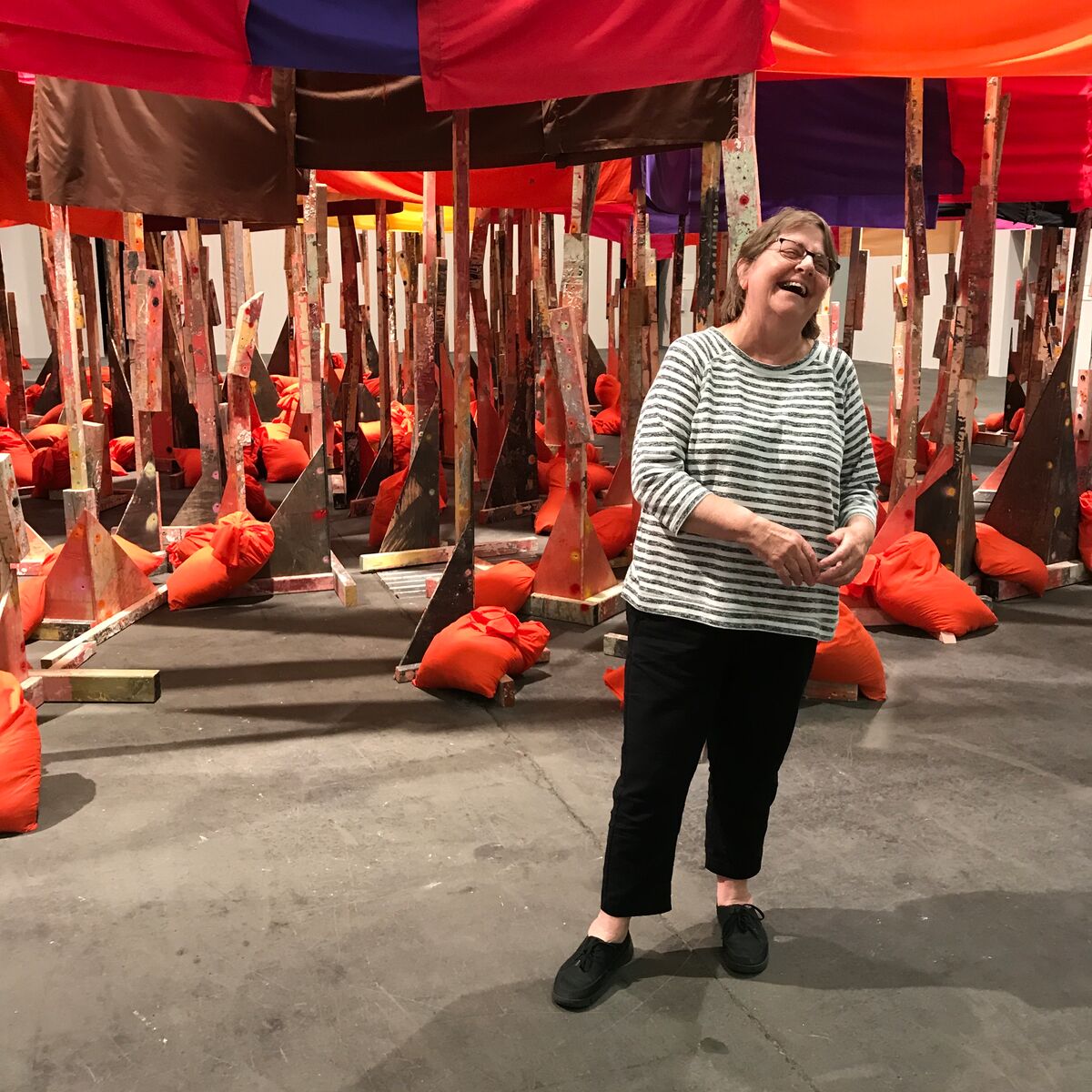
Phyllida Barlow at Haus der Kunst, 2021. Photo: Neil Wenman
READ MORE: DAME PHYLLIDA BARLOW
Phyllida Barlow (1944–2023) was one of the most distinctive sculptors to emerge in post-war Britain and a defining figure in contemporary British sculpture. She developed a sculptural language that challenged long-standing associations between sculpture, monumentality and permanence.
Born in Newcastle upon Tyne and raised in London, Barlow studied at Chelsea School of Art and the Slade School of Fine Art in the 1960s. Alongside her studio practice she maintained a long and influential career in teaching, working at several institutions before becoming Professor of Sculpture at the Slade School of Fine Art, where she taught for more than two decades until 2009. Her rigorous and generous approach to teaching shaped several generations of artists and had a lasting impact on contemporary British sculpture.
Barlow’s work gained widespread international recognition from the early 2000s. She exhibited widely at major institutions including Tate Britain, London; the New Museum, New York; the Nasher Sculpture Center, Dallas; and the Serpentine Galleries, London, and her work is held in leading public collections including Tate, London; the Museum of Modern Art, New York; the Centre Pompidou, Paris; and the Art Institute of Chicago. In 2017 she represented Great Britain at the 57th Venice Biennale, presenting the installationfolly in the British Pavilion.
Barlow was appointed Commander of the Order of the British Empire (CBE) in 2016 and was later made Dame Commander of the Order of the British Empire (DBE) in 2021. Barlow lived and worked in London.
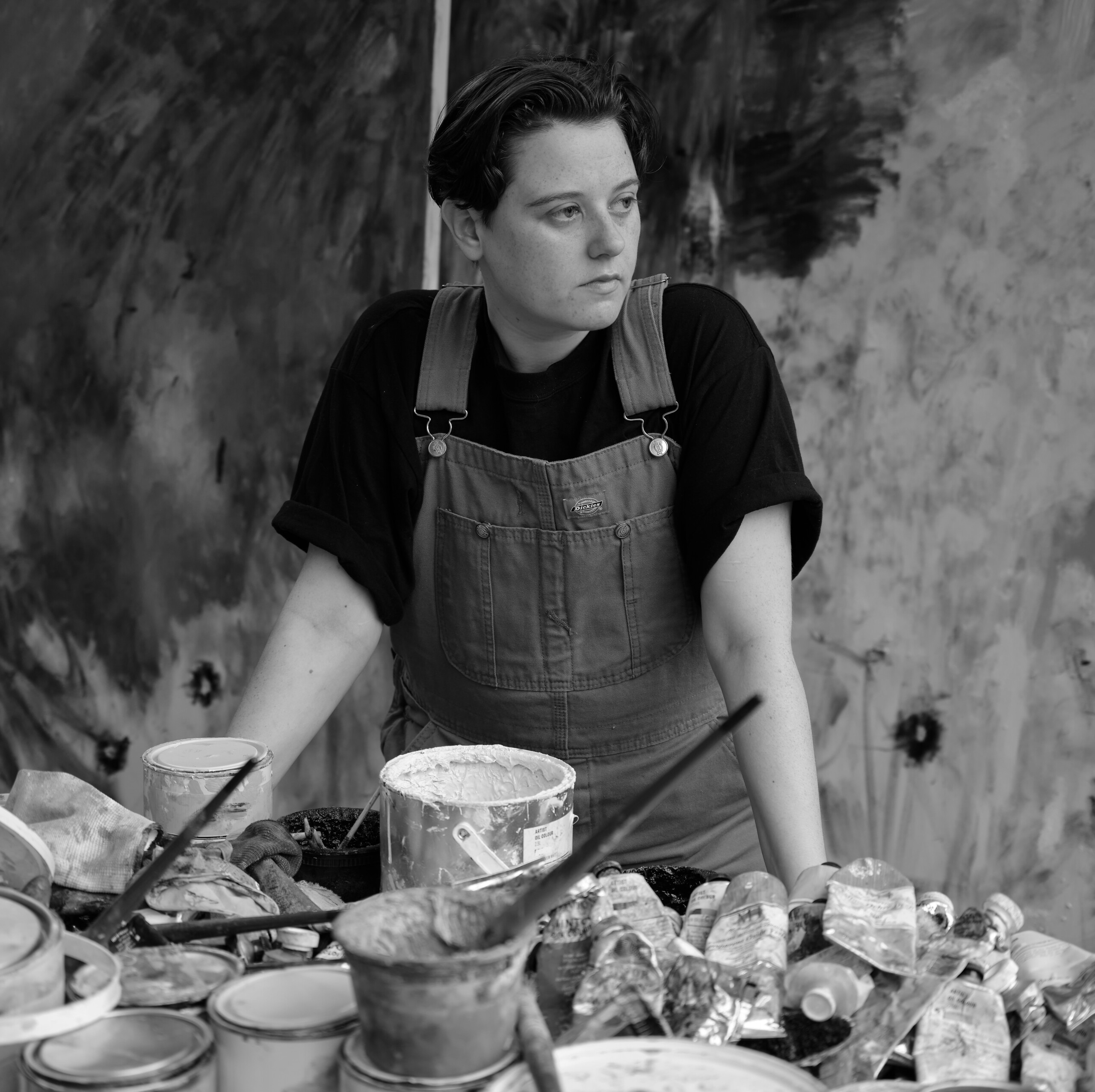
Daisy Parris, Courtesy of the artist and Sim Smith, London. Photography by Max Bainbridge
READ MORE: DAISY PARRIS
Daisy Parris (they/ them) is a painter of psychological space. Direct text-based works and abstract paintings are made up of a vernacular that has developed through experience, relationships and through the depths and the peaks of their human existence thus far. Parris brings intimacy, insight and integrity to their paintings with great psychological and emotional force. The work is imbued with the sensitivity of one who feels everything, taking us through unflinching narratives and moments of reflection and tenderness. An ode to human existence, their work is sometimes silent, sometimes savage, with paintings that construct self-portraits of personal battles and triumphs in a fast moving yet contemplative assault on the canvas.
They received a BA (Hons) in Fine Art from Goldsmiths University, London. Parris exhibited a textile installation at The Royal College of Physicians, Regent’s Park, London in October 2025, joined the Roberts Institute of Art Residency in Scotland in September 2025, and had their first solo institutional exhibition at CICA Vancouver in March 2025. Exhibitions in 2024 include Back To The Sky, Sim Smith, London; Weird Rain, James Fuentes, Los Angeles; and No Storm Was Ever Quite So Fierce, Green Family Art Foundation, Dallas; Alchemists, Pond Society, Shanghai, China; Rupture & Connection, Green Family Art Foundation, Dallas; and Present Tense, Hauser & Wirth, Somerset.
Parris lives and works in Somerset, UK.
Book your tickets…
11am – 4pm Wednesday to Sunday | Last entry is at 15:45
Tickets are free for the exhibition and entrance to Wolterton, but must be booked in advanced. Please select a date and the number of tickets
Dates available:
We invite you to consider a donation to The Ted Ellis Trust, which is dedicated to the preservation of the unique Wheatfen Nature Reserve. The Ellis family’s commitment to environmental conservation spans generations and continues to this day at Wolterton. You can learn more here.
Click ‘Donate’ to donate £5 to The Ted Ellis Trust when you book your free ticket to come and visit us.

Phyllida Barlow, untitled, 2010, acrylic on paper, 42.5 x 59.8 cm / 16 3/4 x 23 1/2
inches
© Phyllida Barlow Estate. Courtesy the Phyllida Barlow Estate and Hauser & Wirth.
Photo: Alex Delfanne
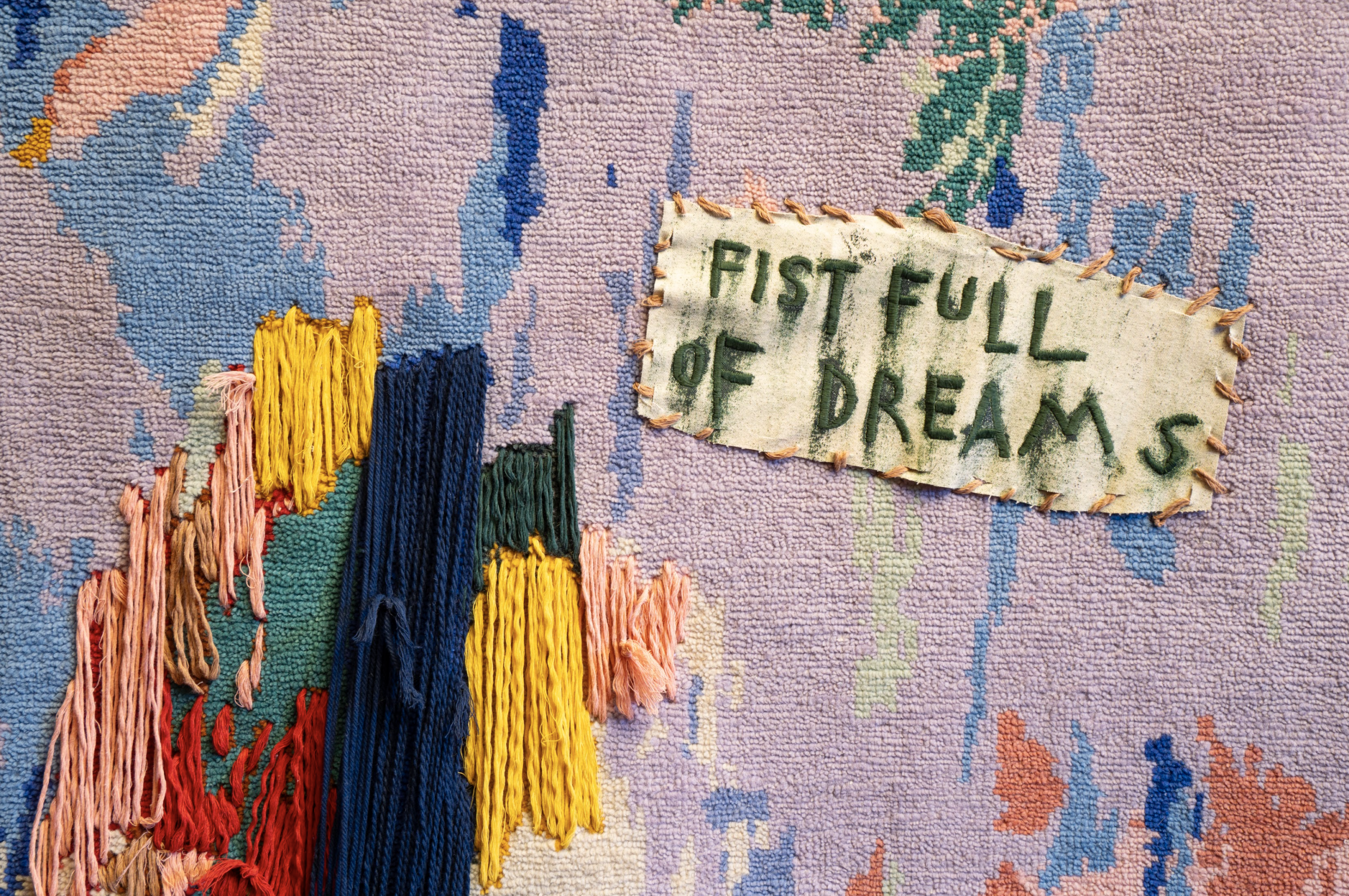
Daisy Parris, Courtesy of the artist and Sim Smith, London. Photography by Patrick Young
‘This year’s programme explores how contemporary art can inhabit, question, and transform inherited historic spaces. Phyllida Barlow’s work challenges Wolterton’s Palladian architectural certainty, while Daisy Parris introduces a raw, visceral emotion to its traditional interiors. By presenting these artists in dialogue we continue our commitment to presenting multigenerational British artists who disrupt visual culture.’
Simon Oldfield Artistic Director of Wolterton’s Art & Culture Programme
Phyllida Barlow, untitled, 2010, acrylic on paper, 42.5 x 59.8 cm / 16 3/4 x 23 1/2 inches
© Phyllida Barlow Estate. Courtesy the Phyllida Barlow Estate and Hauser & Wirth.
Photo: Alex Delfanne
Artist Residencies and Workshops
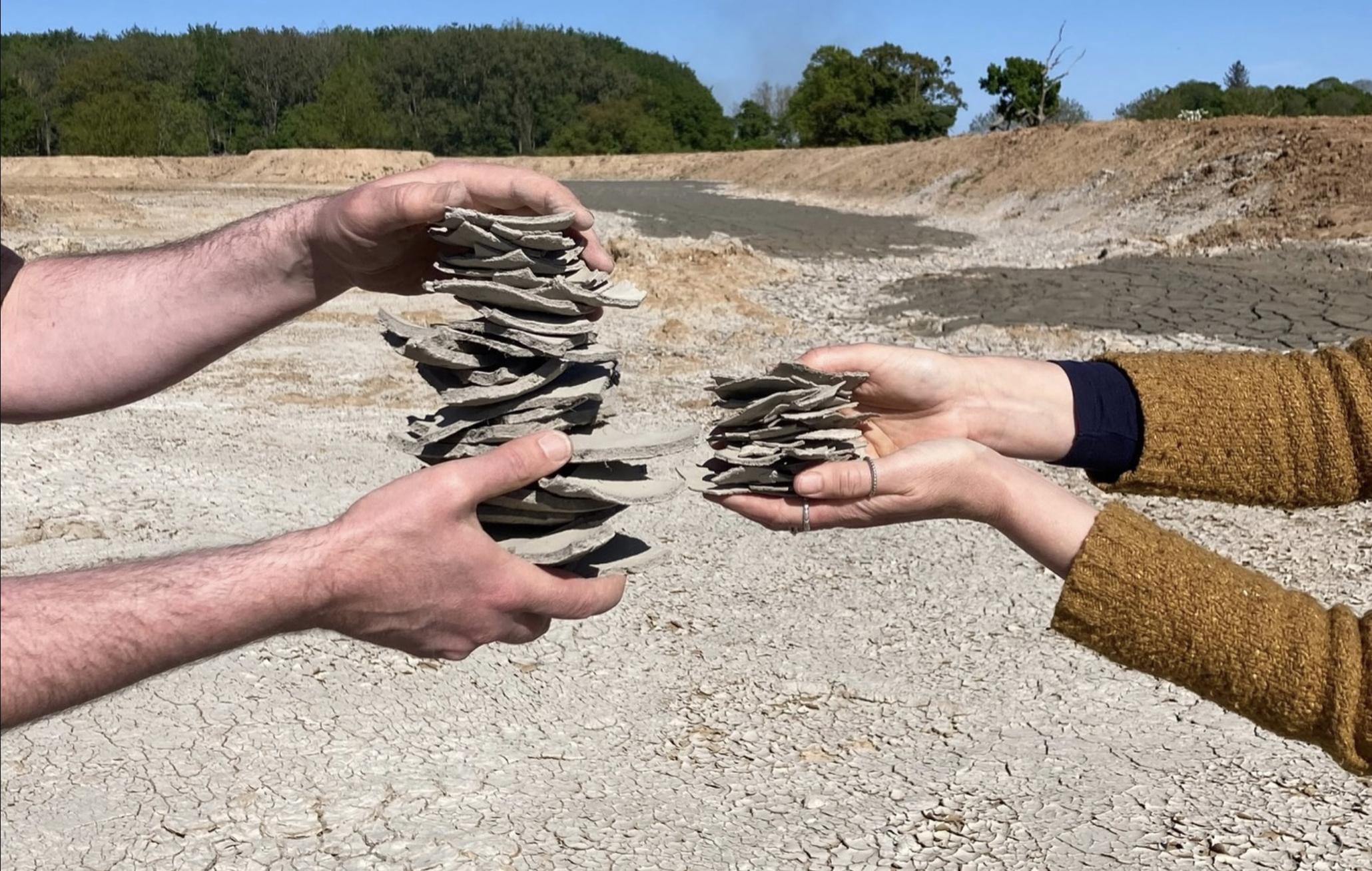
In addition to the exhibitions, Wolterton provides opportunities for new talent, local artists and the public to engage in creative practice. Reflecting Phyllida Barlow’s legacy as an educator, the estate will work with Norwich University of the Arts to support artist residencies for recent graduates who will be invited to stay on the estate this summer and create new work. Visitors can also take part in workshops led by Norwich-based Clay Research Group (CRG), a collective of artists, lecturers, potters, and researchers dedicated to exploring locally sourced ceramic materials. As part of their ongoing research from 2025, CRG will use clay extracted from Wolterton’s lake to create materials for workshop participants, establishing a circular and sustainable approach that connects the activities directly to the estate’s landscape and history.

READ MORE: SIMON OLDFIELD
Artistic Director for Wolterton Arts & Culture Programme and founder of Simon Oldfield & Associates, Simon (he/him) uniquely blends curatorial, art advisory, and legal expertise. He has curated exhibitions, including an early solo presentation of paintings by Michael Armitage, ‘Sea State’ featuring Maggi Hambling and Ro Robertson at Wolterton, Norfolk and a charity auction with Gorringe’s at Firle Place, Sussex, and leads cultural place-making projects for Wolterton and Grosvenor Estate in Mayfair. Simon is also co-founder of Pindrop with Elizabeth Day, an organisation that fosters collaborations between leading artists, writers, and actors. His debut book, ‘A Short Affair’ was published by Simon & Schuster in collaboration with the Royal Academy of Arts. A frequent commentator and contributor, Simon’s opinion on curation, art advisory and the wider art market are regularly published and broadcast. He also served on judging panels for awards such as the Sunday Times Watercolour Competition and the Jerwood Drawing Prize, provided expert opinion to a House of Lords’ cross-party Parliamentary enquiry on the creative industries, and sits on the Philanthropy Board of Art UK.
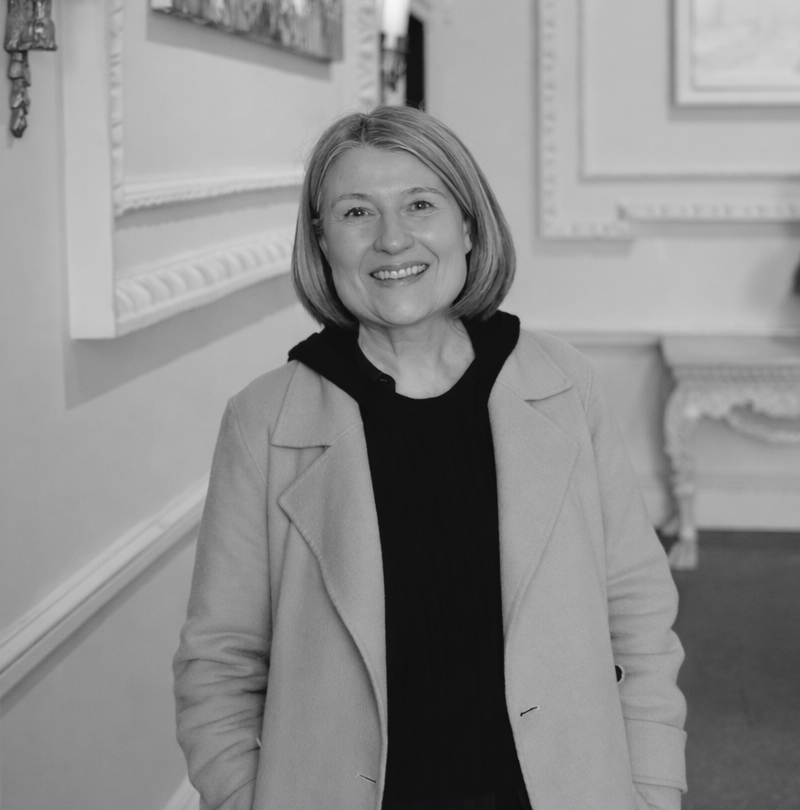
READ MORE: CLARE LILLEY
Clare Lilley (she/her) is a British curator, writer and cultural advisor working internationally with leading artists to realise ambitious, critically acclaimed projects that connect diverse audiences with contemporary art while generating economic, social and human impact. Her collaborators include Ai Weiwei, Fiona Banner, Alfredo Jaar, Amar Kanwar, KAWS, William Kentridge, Bharti Kher, Kimsooja, Giuseppe Penone, Yinka Shonibare CBE, James Turrell, Joana Vasconcelos and Bill Viola.
Formerly Director of Yorkshire Sculpture Park, she led its internationally recognised programme. She curated Frieze Sculpture for a decade and projects for the Venice Biennale; contributes to international art publications; and serves as trustee and advisor to cultural institutions. Her practice is grounded in cross-cultural exchange and a conviction that art creates meaningful social, spatial and intellectual encounter.

READ MORE: GEMMA ROLLS-BENTLEY
Gemma Rolls-Bentley (she/ her) has been at the forefront of contemporary art for almost two decades, working passionately to champion diversity in the field. Her debut book Queer Art; From Canvas to Club and the Spaces Between was published in Spring 2024 by Frances Lincoln and has been highlighted as a must-read by Them, Dazed, Timeout, The Guardian, Cultured and the FT. Her curatorial practice amplifies the work of female and queer artists and provides a platform for art that explores LGBTQIA+ identity. Gemma has curated for a range of international galleries and institutions, most recently Carl Freedman Gallery, Leslie Lohman Museum of Art, ICA London and London Art Fair. In 2022 she curated the Brighton Beacon Collection, the largest permanent display of queer art in the UK, for Soho House Brighton. Gemma has taught at numerous institutions including the Royal College of Art, the Glasgow School of Art, and Goldsmiths. She co-chairs the board of trustees for the charity Queercircle, sits on the Courtauld Association Committee, and the Leslie Lohman Museum Acquisitions Committee.
Our Previous Exhibitions

‘Sea State’
An exhibition by Maggi Hambling and Ro Robertson
Our inaugural exhibition, ‘Sea State’, featured new work by Maggi Hambling and Ro Robertson and was co-curated by Simon Oldfield and Gemma Rolls-Bentley.